Defensible Space
Fuel reduction around homes, barns, shops and outbuildings. Brush, saplings and ladder fuels removed so fire slows down before it reaches a structure.
- Home ignition zone work
- Barns & outbuildings
- Ladder-fuel removal
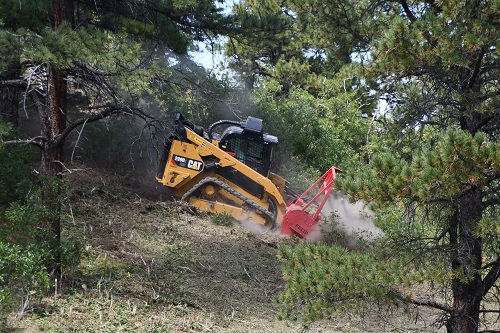
Excavators and skid steers armed with forestry mulching heads grind brush and small trees into mulch where they stand. Fire breaks and defensible space, built in a single pass — nothing hauled, nothing burned.
Working with local governments, ranches and rural landowners across British Columbia.
It travels through the brush, saplings and deadfall surrounding it. That understory is a fuse running straight to your buildings.
Low brush and small trees carry a ground fire up into the canopy, where it spreads faster and throws embers further.
Unbroken vegetation gives fire a path to homes, barns, shops, hay and equipment.
Buildings, livestock, machinery and timber value can be lost in a single afternoon — and some losses can't be replaced.
FireSmart BC Home Ignition Zone. Our machines do their heaviest work in the extended zone and beyond — where fuel loads are greatest and hand crews are slowest.
The traditional approach is a crew with chainsaws and a chipper truck. Every branch is cut, dragged, fed, hauled and paid for at the dump. A forestry mulcher does all of it in one pass, and the material never leaves the ground it grew on.
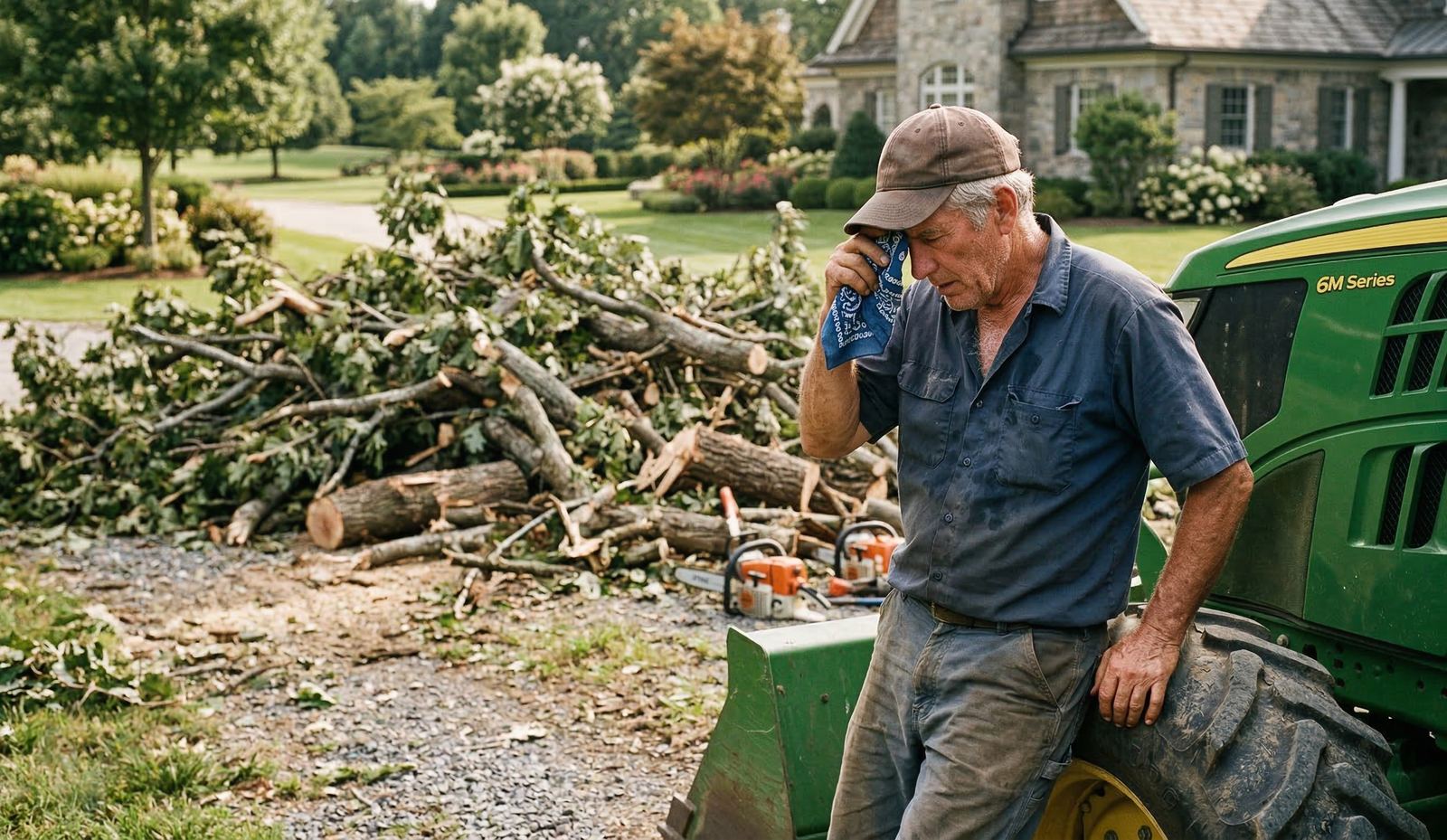
Honest math: a crew that only cuts and leaves debris on the ground can cost less per acre. Once chipping, piling, burning, hauling and disposal are added, forestry mulching is typically comparable or lower — and it's finished in one entry instead of several. Source: USDA Forest Service, To Masticate or Not (RMRS-GTR-381, 2018). The free guide breaks down the full comparison.
A forestry mulching head is a heavy rotating drum lined with hardened carbide teeth. It turns over at high speed, driven by the machine's hydraulics.
The operator brings the spinning head into brush and small trees. Excavator-mounted heads reach up slopes, over ditches and in tight around trees you want to keep.
Stems, branches and shrubs are shredded on contact into bark mulch and wood chips, right where they stood.
The material settles as a ground layer that holds soil, keeps moisture in and slows regrowth. The ladder fuel is gone; the mulch stays.
Think of it as a wood chipper built onto the front of the machine. Instead of a crew feeding it all day, the machine feeds itself as it drives.
Fuel reduction around homes, barns, shops and outbuildings. Brush, saplings and ladder fuels removed so fire slows down before it reaches a structure.
Wide, continuous breaks along property lines, access roads and the wildland–urban interface. They interrupt the fuel bed and give crews a defensible line to work from.
Overgrown acreage turned back into usable land. Pasture, building sites, sightlines and trails are reclaimed without a single burn pile.
Fuel management for local governments, parks and community interface zones. Work is delivered to your prescription, with the production rate large projects need.
Two machine platforms, each fitted with a forestry mulching head and matched to the terrain, plus specialized support equipment for the jobs in between.
Boom reach puts the head where tracked machines can't drive: steep slopes, ditches, creek edges and in close around trees and structures you're keeping.
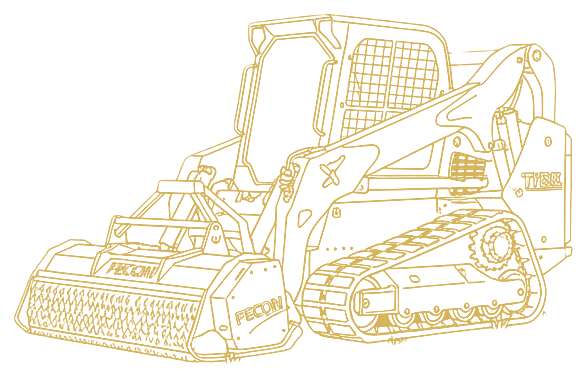
A front-mounted drum mulcher on a tracked carrier. Built for production on open and rolling ground, where it covers acreage fast.
Interface fuel treatments, parks and community wildfire protection projects. Delivered to prescription by an operator who shows up with the machines on the day it was scheduled.
Fire breaks around barns, hay and livestock. Encroaching brush pushed back off pasture and fence lines, so the land you own is land you can use again.
Defensible space around your home and outbuildings, done properly and done once — by a team that removes the risk instead of rearranging it.
Before you hire anyone to clear your land, know what you're actually paying for. This guide puts forestry mulching side by side with a hand crew and chipper truck, honestly and in plain language.
We discuss your property, objectives and timeline.
We assess terrain, fuel load, access and the structures to protect.
A defined scope, machine plan and price before anything moves.
We clear at 1–2 acres per day, with nothing left to haul or burn.
Regrowth returns over time. We schedule follow-ups so the work holds.
Typically 1–2 acres per machine-day. Slope, vegetation density and stem size are the biggest variables. We'll give you a realistic estimate after the site walk.
Brush, shrubs, saplings and small-diameter trees, generally up to about 6 inches across, are ground to bark mulch and chips. Larger trees are assessed on site and handled separately where needed.
It stays on your property as a layer of mulch. Nothing is hauled away and nothing is burned, so there are no disposal fees and no dependence on burn windows.
Usually, once the whole job is counted. A crew that only cuts and leaves debris can be cheaper per acre. Adding chipping, hauling, disposal or pile burning typically makes mulching comparable or lower, and it finishes faster. The free guide walks through the full comparison.
Yes. Our excavator-mounted mulcher works from a stable position and reaches up slopes, over ditches and around trees and structures with precision.
Yes. We deliver fuel treatments to the prescriptions and specifications you provide, and work alongside your wildfire and parks staff on scheduling and access.
It depends on the site and species, but regrowth returns over a number of years. Many clients schedule periodic re-treatment so their defensible space stays effective.
Share the basics and we'll schedule a site walk. You'll receive a written proposal with a defined scope and price before any work begins.
Start with the guide, or start with a site walk. Either way, start before fire season does.